
With six spring training games in the books, we are starting to get a taste of what the 2026 Yankees team may look like. With the lineup and rotation set in stone for the most part (barring any Spring Training or World Baseball Classic injuries), the bullpen is the spot to look at and take a guess at who’s making it, and who’s coming up short.
To start, let’s take a look at the bullpen’s of the past. The 2025 Yankees bullpen was a major disappointment. The team ranked 23rd in ERA (4.37), and 21st in fWAR (2.8), two marks that ranked bottom ten in all of baseball. This was a surprisingly disappointing year for a bullpen constructed by Pitching Coach Matt Blake. From the season Blake joined the Yankees (2020) through 2024, the bullpen ranked 3rd in ERA (3.47), and 6th in fWAR (21.6). During this five year stretch, Blake’s bullpens weren’t very strikeout dominant, ranking just 12th in all of baseball in K/9 (9.34). However what they did excel at was limiting damage. Over this stretch, the Yankees were tied for first with the Dodgers in HR/9 (0.93), and first in groundball % (48.3%), line drive % (18.5%), flyball % (33.2%). While the 2025 Yankees did improve in the strikeout department, they also took a step back in preventing damage, which they were so good at in years past. The bullpen’s 13.4% HR/FB ratio ranked 4th highest in the MLB, which is likely to naturally regress closer to the mean, where they were for the five years prior (12th highest in MLB, 11.5%). The HR/FB ratio will always be naturally higher for this team, playing at a ballpark built for home runs to right field. However, last year’s high number was likely an outlier.
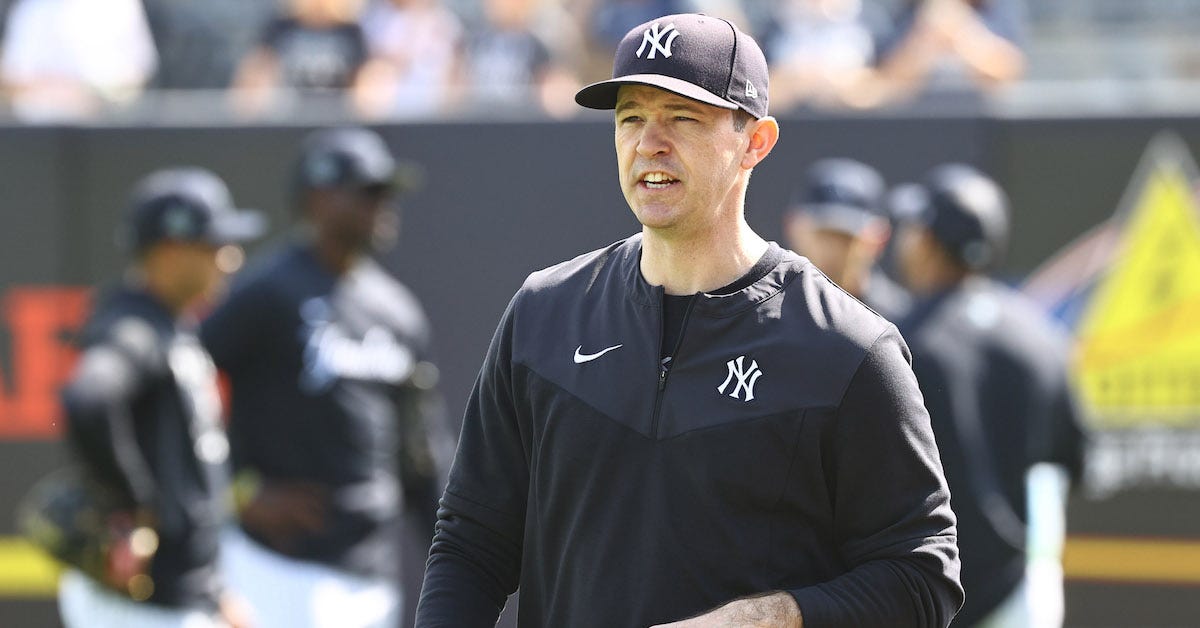
The backend of the bullpen has a complete makeover compared to what we saw at this time last year. It was expected that Luke Weaver and Devin Williams would be one of the best, if not the best bullpen duo in all of Major League Baseball, and that simply just did not go to plan. Those two will look to right the ship across town in Queens, where they will likely be taking over the 8th and 9th inning roles there. Three of the Yankees top four relievers in innings last year are now elsewhere. Williams, Weaver, and Mark Leiter Jr, who went across the country to join the A’s. The Yankees did a lot of work for this season at last year’s trade deadline, acquiring David Bednar, Camilo Doval, and Jake Bird, all of whom had at least another year of team control. Now, let’s take a look at Aaron Boone’s options.
The Locks:
David Bednar – Acquired from the Pittsburgh Pirates at the trade deadline, Bednar quickly took over as the Yankees closer and was quite good. In 24.2 innings, he had a 2.19 ERA with a 36.1% K rate, ten saves, and a 1.50 ERA in his first six postseason innings of his career. After a trip to pitch in the WBC, he will be the closer to start the season.
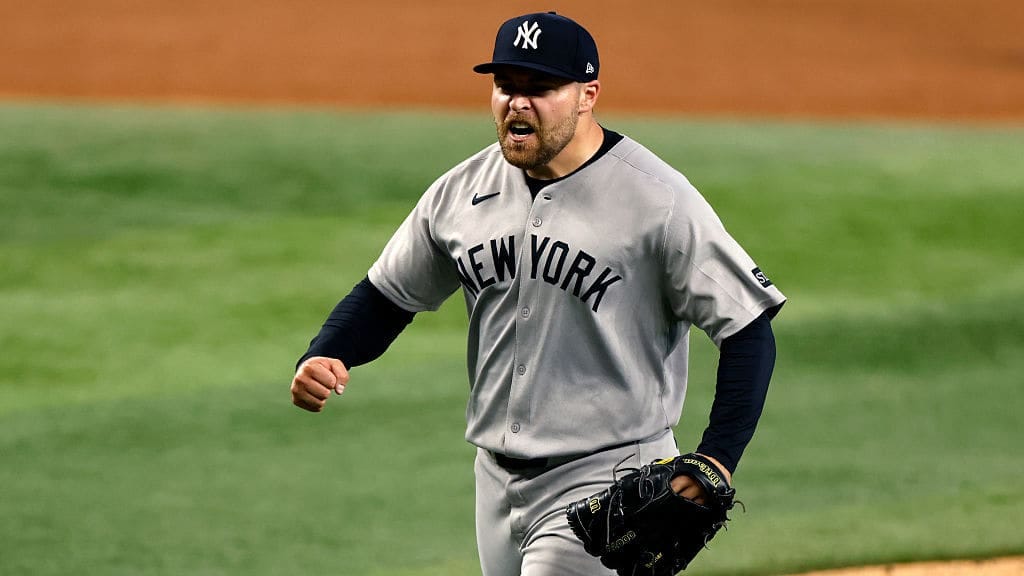
Camilo Doval – Acquired from the San Francisco Giants at the trade deadline, Doval’s numbers after the trade weren’t what the Yankees were hoping for. A 4.82 ERA with a 12.6% walk rate in 18.2 innings. The Yankees will be hoping he can regain his first half form, or better yet his 2023 form, where he was an all star and saved 39 games for the Giants. At the end of the season, the Yankees experimented with a glove positioning change, and he was able to finish strong with his last six appearances being scoreless and a 2.70 ERA in 3.1 postseason innings (despite a small sample size).
Fernando Cruz – Acquired (notice a trend here, the Yankees love to trade for their top pen arms!) from the Cincinnati Reds before last season, Cruz had two IL stints but was able to pitch 48 innings to a 3.56 ERA. Cruz’ 36.0% strikeout rate can be attributed to his wicked splitter, which he threw 60% of the time last year with a 56.6% whiff rate. Similar to Doval, command is an area for improvement with Cruz, as he had a 12.0% walk rate last season. As long as he still has that splitter working, Cruz will be a good option for Boone to turn to in a set-up role.
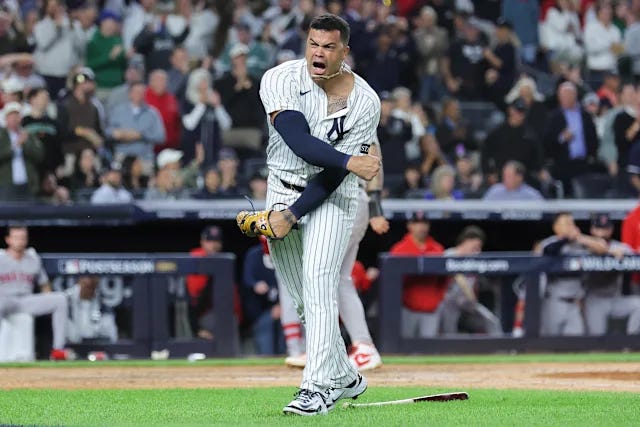
Tim Hill – Boone showed that Hill is one of his most trusted guys, giving him the ball 70 times last season in which he pitched to a 3.09 ERA. Hill, a funky lefty who throws from a -24° arm angle, is a ground ball specialist who won’t impress you on the radar gun. He’s proven to be clutch in the postseason, sporting a 0.79 ERA in 11.1 innings for the Yanks the past two seasons. Regression is a concern for Hill, as he recently turned 36 years old. His damage prevention took a step back last season, as he went from a 67.8% ground ball rate and a 1.7% barrel rate, to 64.2% and 7.9%.
Ryan Yarbrough – Much of Yarbrough’s role for the 2026 season depends on rotation injuries. As of right now while Rodon and Cole are still rehabbing, Yarbrough would step into the rotation if one of the five current starters went down. He showed last year he can do it, starting eight games for the Yanks and holding his own while doing so. While not as extreme as Hill, he’s got some similar traits as aging lefties who throw from a low slot, and prioritize weak contact. Yarbrough will be on this team in some way, whether it’s in the rotation or as a long reliever.
Fighting for a Spot:
Jake Bird – Acquired from the Colorado Rockies at the deadline, Bird never found his footing, and quite frankly, wasn’t given much of a chance to find his footing last season in the Bronx. After just three appearances where he struggled mightily, he was sent to the minors and was never called back up. Bird is a righty who throws from a very low arm angle, and has two nasty breaking balls in his sweeper and curveball. After trading away under the radar prospect Roc Riggio last summer and with Bird still having three years of control, I have a tough time believing the Yankees are already giving up on him after being here for just half a season.
Paul Blackburn – While it was clear the Yankees were content with running it back, Blackburn was still a bit of a surprise to see back on a major league deal. Despite an ugly first Yankee appearance in Boston where he gave up seven earned runs, he settled down nicely and pitched 12 innings the remainder of the regular season to a 1.50 ERA, before getting rocked in his lone playoff appearance against the Blue Jays. Blackburn added two inches of drop on his sinker after coming to the Yankees, a sign of a potential Matt Blake tweak. Blackburn’s fate may be decided by whether or not Yarbrough is in the rotation, as his role as a long reliever would be redundant.
Brent Headrick – After an impressive short sample in the bigs in 2025, Headrick remains a good option as the pen lacks a lefty outside of Hill. He pitched 23 innings to a 3.13 ERA, with a 32.6% strikeout rate. Headrick hunts strikeouts, mainly featuring his fastball coming in from a high slot with 18.8 inches of Induced Vertical Break (IVB). He also uses a slider and splitter off the four-seamer. A key for him is consistency between outings. Some nights he’d be averaging 97mph on his heater, then the next night he’d average 92mph.
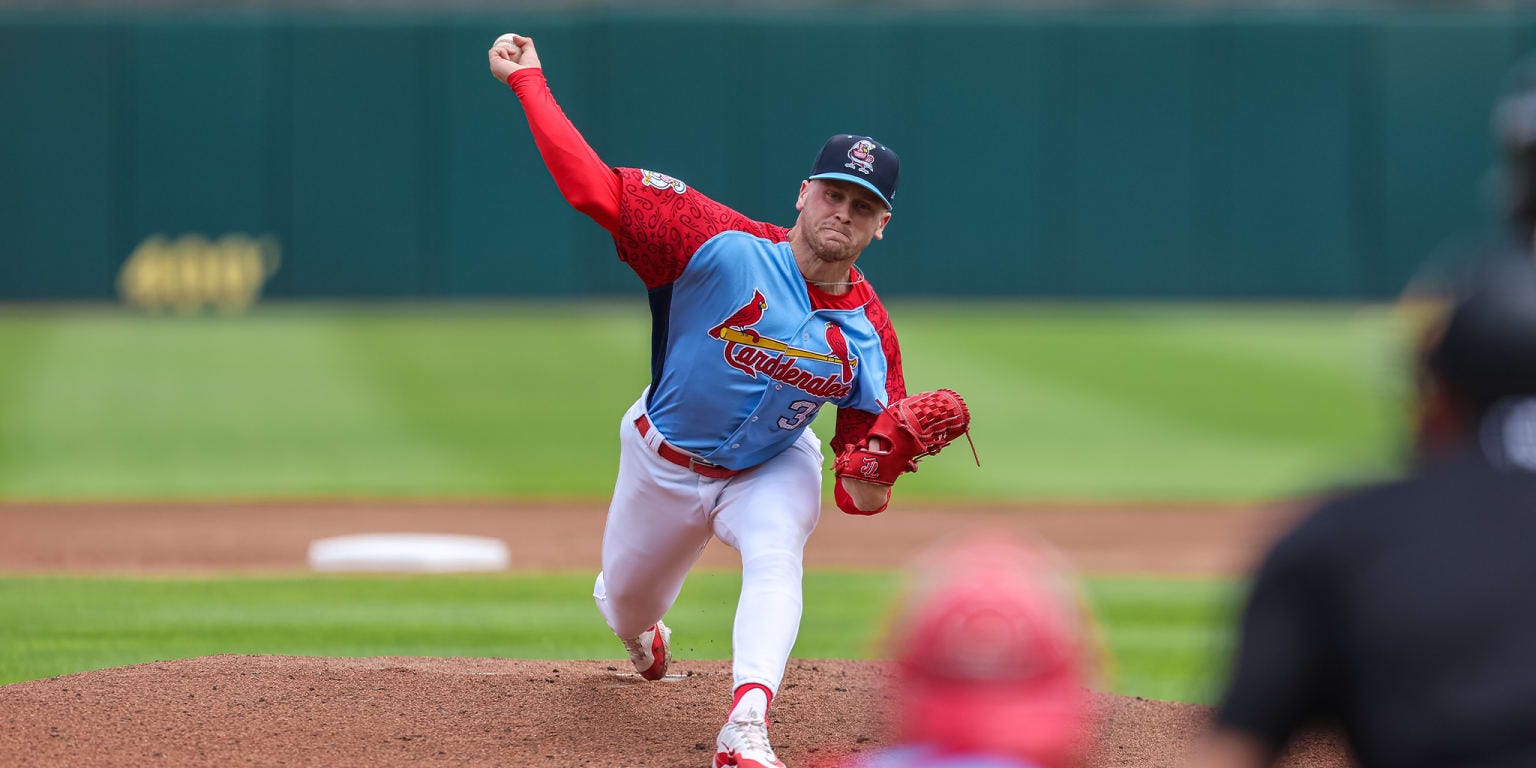
Cade Winquest – Possibly the most intriguing name on this list, Winquest was the Yankees first major league rule 5 draft selection since 2011, a sign of the confidence they have in him. Winquest has only reached the double A level, so this will be quite a jump not only to the big leagues, but pitching for a team with World Series aspirations. If he makes the team, he will move from a starting role into a bullpen role, which often results in a velocity and stuff boost. It has been reported that during the eighth round of the 2022 MLB Draft, the Yankees were choosing between Winquest from Texas-Arlington and another college arm named Cam Schlittler. They went with Schlittler hoping that Winquest would still be available in the ninth round, however he was taken shortly after by the St. Louis Cardinals. Now, those two have the chance to be in the same MLB locker room just as the Yankees had hoped.
Yerry De Los Santos – We saw Yerry pitch quite a bit last year (35.2 innings) and get solid results, posting a 3.28 ERA. With one minor league option left, I’d think that is where the Yankees imagine him being to start the season. It is better to go for someone with more upside for a middle-relief, one inning role, when you already have someone to cover a long-relief role.
Angel Chivilli – Acquired from the Colorado Rockies this winter, Chivilli is a project arm to say the least. He got a large body of work in Colorado last year (58.2 innings) but posted a 7.06 ERA. Matt Blake has a starting point to work with, a four-seam fastball that averaged 97.1mph last year, but even with that, the shape is quite poor. Two metrics that might’ve intrigued the Yankees- a 29.7% whiff rate, and a 49.8% ground ball rate, both 80th percentile plus in their respective categories. With one MiLB option remaining, I believe this is the route the Yankees are looking to take.
The Others:
Kervin Castro, Rafael Montero, Dylan Coleman, Carson Coleman, Harrison Cohen, and Bradley Hanner are all desperate for a great spring to even have a shot. These guys are all bodies to cover spring innings, and see if something seems to click for them. Minor leagues are a possibility, and it’s also a good time to showcase your talent for another team, who might be more desperate for a bullpen piece.
My Prediction:
CL David Bednar
SU Camilo Doval
SU Fernando Cruz
MID Tim Hill
MID Jake Bird
MID Cade Winquest
MID Brent Headrick
LR Ryan Yarbrough